Indigenous people day theme 2025
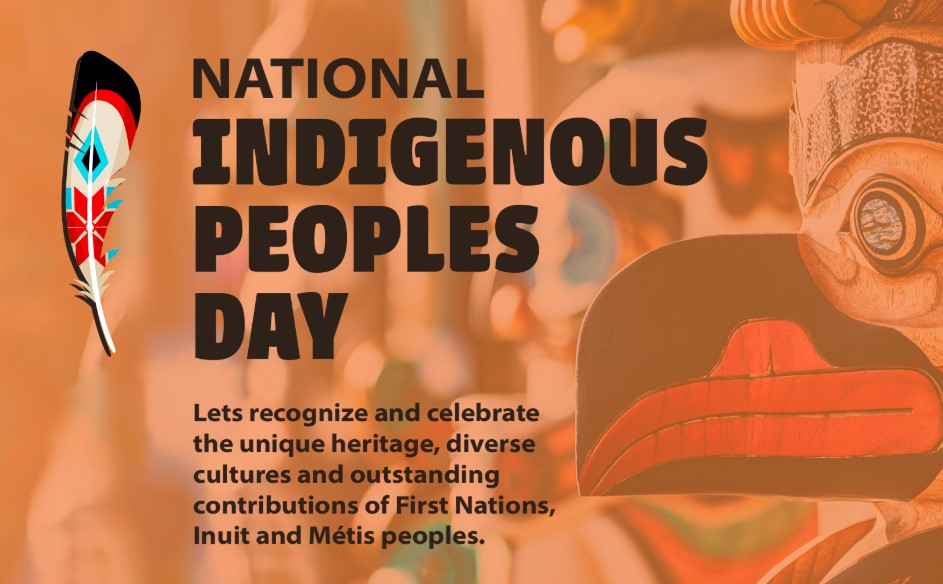
Indigenous Peoples Day” (or “Indigenous Peoples’ Day”) is a day of commemoration, reflection, affirmation, and action. In many places, it is held in lieu of or alongside Columbus Day or other colonial-era observances. Its purpose is to shift focus from colonial narratives toward honoring the histories, cultures, knowledge systems, and rights of Indigenous peoples—those who lived on the land long before modern borders and who continue to persist despite centuries of displacement, colonization, and oppression.
For 2025, to fully explore what the “theme” of Indigenous Peoples Day might be (and should be), one must look at both the international observance—International Day of the World’s Indigenous Peoples (celebrated August 9 each year by the United Nations)—and local/regional Indigenous Peoples Day celebrations (e.g. in the United States on the second Monday of October). These observances often adopt a guiding theme for reflection, programs, and advocacy.
2025 International Theme: “Indigenous Peoples and AI: Defending Rights, Shaping Futures”
For the International Day of the World’s Indigenous Peoples on August 9, 2025, the United Nations has selected the theme:
“Indigenous Peoples and AI: Defending Rights, Shaping Futures.”
This theme foregrounds how the rapid advancement of Artificial Intelligence (AI) poses both risks and opportunities for Indigenous communities. While AI technologies offer tools for language revitalization, cultural archiving, environmental monitoring, and democratizing access to information, they also risk perpetuating biases, misappropriating Indigenous data, erasing nuance, and disempowering communities if deployed without consent, ownership, or cultural grounding.
The UN emphasizes that Indigenous Peoples must be recognized as rights-holders, co-creators, and decision-makers in shaping AI systems, to ensure meaningful inclusion, data sovereignty, and respectful innovation.
In their statement, the Secretariat of the Convention on Biological Diversity notes that unsafeguarded use of AI may undermine principles of consent and control over traditional knowledge, while appropriately guided applications could support efforts to address biodiversity loss, climate adaptation, and other urgent environmental challenges.
Thus, globally, the 2025 theme invites a deep reflection on how Indigenous communities can engage with, shape, and benefit from emerging technologies—not as passive recipients, but as leaders.
Local/Regional Themes: Example from Cincinnati
While the international theme is clear, local communities often adopt their own thematic framing for Indigenous Peoples Day observances. One example is Cincinnati’s Indigenous Peoples’ Day Convergence, whose 2025 theme is:
“Ancestral Visions, Future Dreams.”
This theme highlights how relational Indigenous worldviews draw upon ancestral wisdom while orienting toward future aspirations: how tradition and innovation can co-exist, how ancestors’ teachings shape present identities, and how youth can dream paths forward that are rooted in culture and sovereignty.
Thus, in many contexts, the “theme” of Indigenous Peoples Day is not fixed globally, but locally adapted to reflect community priorities—heritage, land rights, language, health, climate, education, self-determination, or—as in this case—intergenerational continuity.
Why a Theme Matters
A theme helps to focus public attention, guide event programming, and anchor advocacy campaigns. It:
-
Incentivizes coherence — Activities such as panels, exhibitions, performances, educational curricula, and media outreach can align under a central motif, making the message stronger and more unified.
-
Centers communities’ priorities — By naming a theme, organizers draw attention to the most urgent issues Indigenous peoples face that year—whether those be health, climate, sovereignty, rights, or technology.
-
Amplifies voices and demands — A theme provides a frame through which Indigenous leaders and communities can speak publicly, asserting demands and sharing stories in relation to a focused question (e.g. “How should AI honor Indigenous data sovereignty?”).
-
Engages allies — Thematic framing helps non-Indigenous audiences, institutions, and governments to better understand and engage with Indigenous concerns in contemporary contexts rather than abstract acknowledgment.
Key Dimensions of the 2025 Theme on AI (International)
Below are some of the core dimensions and tensions inherent in “Indigenous Peoples and AI: Defending Rights, Shaping Futures”:
| Dimension | Opportunity | Risk / Challenge |
|---|---|---|
| Language & culture | AI tools (speech synthesis, translation, and machine learning) can support Indigenous language teaching, archiving, and revitalization. | Poorly designed models may misrepresent or distort minority languages, lack dialectic nuance, or appropriate sacred narratives without context. |
| Environmental & land monitoring | AI-driven remote sensing, climate modeling, and species tracking can pair with Indigenous ecological knowledge to monitor ecosystems and respond to change. | Data infrastructure (satellites, servers) can extract resources (water, energy) and degrade lands; AI-driven extractive industries may threaten territories. |
| Health, education, services | AI can support telemedicine, adaptive learning, data analytics, and resource allocation in remote communities. | Algorithms may embed biases, underrepresent Indigenous populations, or automate decisions without cultural relevance or consent. |
| Data sovereignty & governance | Indigenous communities can establish their own standards, protocols, and governance over how data about them is collected, stored, and used. | External institutions may override or bypass community protocols; “open data” norms may conflict with preservation of sacred knowledge. |
| Control vs algorithmic control | Indigenous communities could lead AI innovation grounded in cultural values. | If AI systems are controlled by external actors, communities risk being subjects rather than agents of technological systems. |
The theme calls on governments, technologists, civil society, academic institutions, and Indigenous communities themselves to ensure that indigenous rights are respected in the AI era—especially the rights to free, prior, and informed consent; cultural integrity; and governance over knowledge systems.
Beyond AI: Broader Themes & Trends
While AI is the specific 2025 focus for the UN observance, Indigenous Peoples’ Day more generally often revolves around several recurring thematic strands. These include:
-
Self-determination and sovereignty — the right of Indigenous nations to govern their lands, politics, culture, education, and resource use.
-
Land rights and territory — defending ancestral lands, resisting displacement, and preserving ecological integrity.
-
Language revitalization and cultural continuity — protecting endangered languages, songs, rituals, stories, and cultural knowledge.
-
Intergenerational resilience — how elders, youth, and families sustain tradition amid change, trauma, and modernization.
-
Climate justice and ecological stewardship — Indigenous communities often stand at the forefront of protecting biodiversity, resisting extractive industries, and imagining climate-resilient futures.
-
Healing, reconciliation, and truth — addressing historical trauma, enforced assimilation, human rights abuses, and building pathways for healing.
Thus, in any locale, a 2025 Indigenous Peoples Day observance might blend several of these threads with the local community’s priorities.
Challenges & Critiques to Address
When celebrating Indigenous Peoples Day under any theme, organizers and participants should remain cognizant of risks and critiques:
-
Tokenism and spectacle — The day shouldn’t be reduced to shallow performances or symbolic gestures disconnected from structural change. The theme must connect to ongoing struggles, demands, and empowerment, not just ceremonies.
-
Top-down imposition — External agencies or institutions should not dictate the theme to Indigenous communities. Themes should emerge through consultation and community leadership.
-
Unequal capacity — Rural or marginalized Indigenous communities may lack infrastructure, connectivity, funding, or digital literacy to participate fully in themed events (especially with AI as a focus).
-
Cultural misappropriation — In cultural displays, art, media, or technology, care must be taken to respect protocols, consent, and control over who shares what—and how.
-
Single-issue flattening — While a theme is useful, Indigenous lives and struggles are multilayered. A strong observance maintains flexibility to address multiple linkages—rights, culture, land, health, etc.
-
Implementation gap — It is not enough to choose a theme; the commitments (funds, policy changes, institutional shifts) underpinning that theme must follow.
What a 2025 Indigenous Peoples Day Could Look Like (Globally and Locally)
Global-level initiatives might include:
-
UN- and NGO-hosted webinars, panels, and dialogues about AI and Indigenous rights.
-
Publication of guidelines or frameworks on Indigenous data sovereignty, AI ethics, and AI co-development.
-
Funding opportunities for Indigenous-led AI and digital infrastructure projects (e.g. language tools, community GIS).
-
Showcasing case studies of successful AI–Indigenous partnerships (e.g. coral reef monitoring using Indigenous knowledge + AI)
-
Youth hackathons or “cultural tech” labs supporting Indigenous innovation.
Local-level observances might include:
-
Community forums or town hall meetings: “AI and our community: benefits, risks, and safeguards.”
-
Workshops on digital literacy, data governance, community archives, mapping ancestral lands.
-
Exhibitions blending traditional knowledge and technological tools (art + code, storytelling + digital media).
-
Performances, storytelling, dance, and visual art centered on ancestral visions and future dreams.
-
Youth and elder dialogues on how tradition and technology can co-exist.
-
Partnerships with universities, tech organizations, libraries, and museums to host respectful collaborative projects.
-
Calls to policymakers to ensure protections for Indigenous rights in national AI regulation.
For example, Cincinnati’s adoption of “Ancestral Visions, Future Dreams” encourages local reflection on cultural continuity while imagining how tradition guides tomorrow’s opportunities.
Significance for Bangladesh / South Asia
While Indigenous Peoples Day in the U.S. and the UN’s International Day are the most globally recognized, the Indigenous communities in Bangladesh (e.g. Adivasis, tribal groups in Chittagong Hill Tracts, or ethnic minority groups in the North) can also look toward such observances for empowerment and visibility.
A Bangladesh-oriented observance in 2025 adopting a theme like “Indigenous Knowledge and Digital Futures” could draw lessons from the global AI focus while rooting it in local priorities:
-
Preserving indigenous languages, scripts, and oral traditions in digital form (text, audio, video).
-
Mapping ancestral lands, forests, water sources, and land-use changes via community-driven geospatial systems.
-
Ensuring data about land, climate, health, and resource use is owned and governed by the communities themselves.
-
Mobilizing youth in tribal communities to learn coding, digital media, GIS, and AI ethics.
-
Sponsoring art and storytelling contests on ancestral knowledge, climate adaptation, and future dreams.
In doing so, such observances help bridge global frameworks to local realities, enabling Indigenous voices in Bangladesh to engage with AI, data sovereignty, and digital futures on their own terms.


