Columbus day parade cancelled
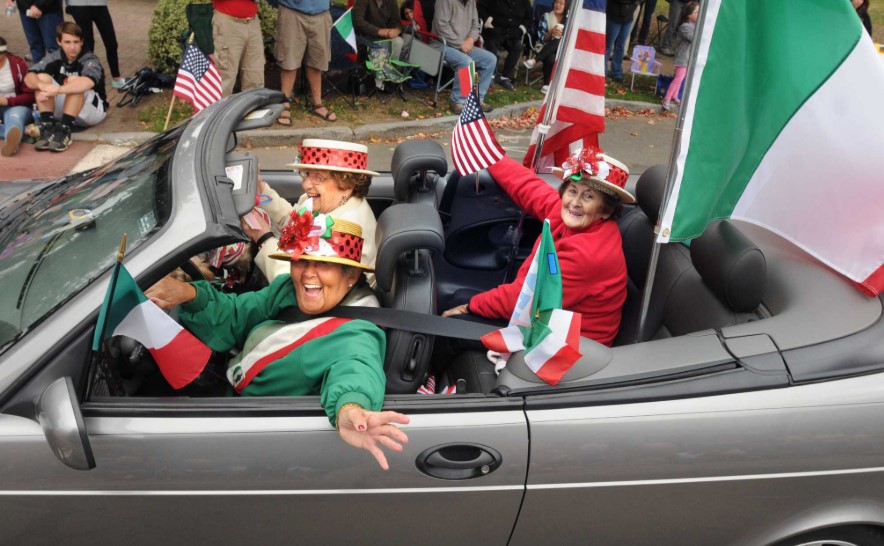
The cancellation of a Columbus Day parade—even if only for one year—resonates far beyond the streets on which floats and marchers would have moved. It reflects an intersection of weather, public safety, community traditions, and shifting cultural debates. Below is a detailed exploration of a Columbus Day parade cancellation: its causes, impacts, controversies, and meaning in the broader societal context.
The immediate cause: safety and emergencies
When a parade is cancelled, there is usually a compelling reason: a threat to public safety. In recent news, New York City’s 81st Columbus Day Parade was cancelled due to a Nor’easter—a powerful storm system bringing heavy rain, high winds, and coastal flooding—after the governor declared a state of emergency.
Organizers stated publicly:
“Due to the Governor’s declaration of a State of Emergency … in response to the dangerous weather conditions … we must cancel the 81st Annual Columbus Day Parade for the safety of all participants and viewers.”
They also noted that it would not be rescheduled and that the next parade would be in 2026.
Weather isn’t the only reason parades get cancelled. During the COVID-19 pandemic, many parades were suspended or postponed because of public health restrictions. For example, the Pittsburgh Columbus Day Parade was cancelled in 2020 to adhere to safety measures.
In another case, Ocean County, New Jersey postponed its parade due to the same storm system, rescheduling for later in the month.
Thus, cancellations often stem from a combination of:
-
Extreme weather or natural disaster risks
-
Official emergency declarations
-
Public health concerns (pandemics, etc.)
-
In some instances, financial or organizational constraints
The impact of the cancellation
On organizers and communities
Parades do more than entertain — they involve months of planning, fundraising, coordination with municipal authorities, logistics (security, road closures, permits). A sudden cancellation can mean:
-
Financial loss: Costs already spent on permits, materials, floats, marketing. Sponsorships may not be reimbursable.
-
Reputational strain: Organizers might face criticism or disappointment from participants and communities.
-
Disruption of tradition: For many local communities, especially those of Italian heritage, Columbus Day parades are a key cultural event. The absence of one year may feel like a loss of continuity.
In the New York case, the parade is organized by the Columbus Citizens Foundation, founded to promote Italian-American heritage. The cancellation means no parade for that year, affecting not only parade participants but community groups, bands, local businesses, and media coverage.
On participants and spectators
A parade typically involves marching bands, civic societies, floats, school groups, cultural associations, and spectators lining the streets. A cancellation means:
-
Loss of opportunity for performers to showcase their work
-
Disappointment for spectators who anticipate an annual celebration
-
Disruption of plans—travel, accommodations, group scheduling
-
Reduced foot traffic and revenue for local vendors and nearby businesses that benefit from parade crowds
Symbolic and cultural implications
Because Columbus Day is a symbolically loaded holiday, its cancellation can be interpreted in multiple ways:
-
Public safety takes precedence: It reaffirms that even long-standing traditions must yield to present dangers. In emergencies, no parade is worth risking lives.
-
A moment of rest or reflection: Forced breaks in tradition may prompt communities to reflect on the holiday’s meaning, not just the festivity.
-
Heightened cultural tensions: Because Columbus Day is controversial—especially in relation to Indigenous history—the cancellation might be seized upon by different sides to make arguments about heritage, representation, and who gets to celebrate.
Columbus Day: contested and evolving
To understand the deeper significance of a canceled Columbus Day parade, we must consider the changing cultural climate surrounding Columbus celebrations.
The traditional narrative
Columbus Day has for decades been celebrated as the commemoration of Christopher Columbus’s arrival in the Americas in 1492. In many U.S. communities, particularly Italian-American communities, it has become a source of pride—honoring Italian heritage and contributions to American society.
The parade on Fifth Avenue in New York is among the most prominent Columbus Day events, organized by the Columbus Citizens Foundation.
The rising critique
In recent decades, growing criticism has emerged:
-
Indigenous perspectives highlight that Columbus’s voyages led to widespread colonization, exploitation, and genocide of native peoples.
-
Many cities and institutions have reconsidered the holiday’s appropriateness, replacing or augmenting it with Indigenous Peoples’ Day, which centers Indigenous histories and cultures.
-
Some statues and monuments to Columbus have been removed, and some parades or events have been rebranded (e.g. “Italian Heritage Day”) to emphasize ethnicity rather than Columbus himself.
Thus, the cancellation of a Columbus Day parade in 2025 does not occur in cultural vacuum—it happens amid ongoing contestation over how we remember history.
Case study: New York City 2025
Let’s look in more depth at the NYC cancellation, to see how all of these threads intersect.
What happened
On October 12, 2025, Governor Kathy Hochul declared a state of emergency for New York City and surrounding counties because of an impending Nor’easter.
That triggered cancellations of large public events, including the Columbus Day parade, as organizers cited safety concerns given the forecast of high winds, heavy rain, and coastal flooding.
They stated they would not reschedule the parade for 2025.
Reactions and interpretations
Some of the public response included:
-
Support for the cancellation as necessary under dangerous conditions
-
Disappointment from those who look forward to the parade as a cultural highlight
-
Speculation about the holiday’s future: the cancellation came at a moment when Columbus Day itself is the subject of political and symbolic contestation
-
Concerns about the organizational costs absorbed by the foundation and participants who had prepared for the event
Symbolic resonance
That the cancellation was forced by weather and emergency rather than by direct protest or politics gives the event a somewhat different tone—it’s not an explicit statement about Columbus, but the absence may still carry symbolic weight. In other words, the silence left by cancellation invites reflection.
Broader patterns and parallel examples
The cancellation of Columbus Day parades is not unique to 2025 or to New York.
-
During the COVID-19 pandemic, many parades were canceled for health reasons. The example of Pittsburgh shows how even longstanding traditions yielded to pandemic safety protocols.
-
In Ocean County, NJ, the parade was postponed from its regular date to October 19 because of the same storm system.
-
At times, communities have canceled or transformed Columbus Day observances for cultural or symbolic reasons, not just safety. Some institutions have dropped Columbus Day entirely or renamed holidays.
What a cancellation can “say” beyond the parade
A parade cancellation is more than the absence of spectacle—it may signal deeper shifts in societal values and tensions:
-
Resilience and flexibility
Communities may learn to adapt traditions—to pause, to reschedule, to rethink how events are held in changing times (climate, safety, social values). -
Cultural rethinking
Absence can provoke questions: Why do we celebrate Columbus? Whose history is honored, and whose is marginalized? -
Opportunity for new rituals
Some might fill the gap with alternative ceremonies: Indigenous-led events, community dialogues, virtual observances, educational programming. -
Memory and continuity
The break may be mourned by those invested in continuity. Yet each break accumulates—a few missed years may lead to reexaminations of whether the tradition should continue in the same form


One Comment