3 reasons to celebrate columbus day?
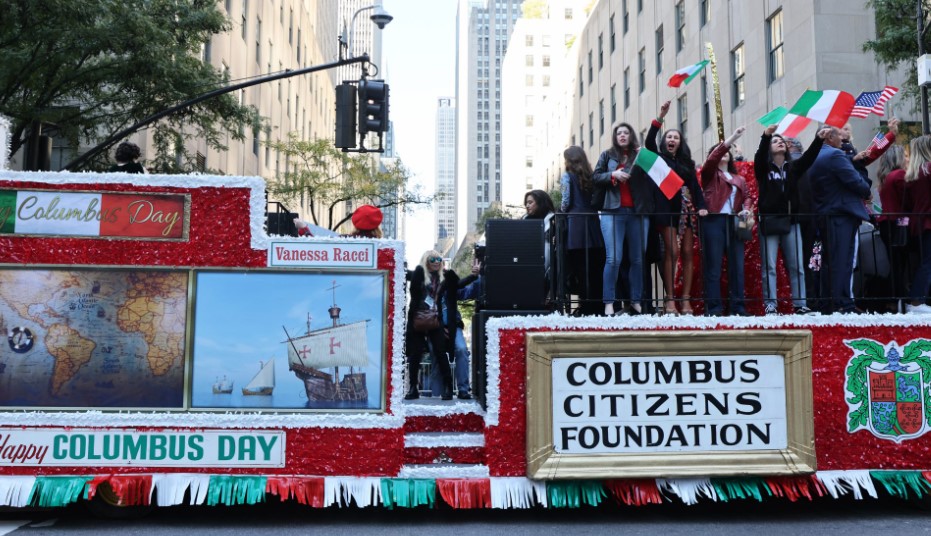
Columbus Day is one of the most discussed and historically rich holidays in the United States. Observed annually on the second Monday of October, it commemorates Christopher Columbus’s arrival in the Americas on October 12, 1492. Although the holiday has become a subject of debate in recent decades, many still view it as a day to honor exploration, cultural exchange, and the beginnings of the modern Americas. While recognizing the complexities of history, there remain important reasons why many choose to celebrate Columbus Day. Below are three compelling reasons to celebrate this holiday: to honor human exploration and discovery, to recognize Italian-American heritage and contributions, and to appreciate the historical impact that Columbus’s voyage had on shaping the modern world.
1. Celebrating Human Exploration and the Spirit of Discovery
At its core, Columbus Day is a celebration of the spirit of exploration—a quality that has driven human progress for thousands of years. Christopher Columbus’s 1492 voyage represented one of the most daring acts of exploration in human history. At a time when most of the world’s geography was still uncharted, Columbus set sail into the vast Atlantic Ocean with limited maps, uncertain knowledge, and a bold vision of reaching Asia by a new route. His courage to embark on such a journey against great odds continues to symbolize the human desire to explore the unknown.
Columbus’s expedition opened the way for a new era of exploration and understanding. Though he never actually reached Asia, his voyages connected Europe with the Americas for the first time, marking the beginning of centuries of global exploration, migration, and exchange. His journey not only expanded the geographical knowledge of his time but also inspired countless others—such as Ferdinand Magellan, Amerigo Vespucci, and later explorers who would map the entire world.
Celebrating Columbus Day reminds us of humanity’s innate drive to push boundaries, take risks, and seek new horizons. The same exploratory spirit that led Columbus across the Atlantic continues today in scientific discovery, space exploration, and innovation. In many ways, honoring Columbus is also about celebrating human curiosity—the courage to ask “what’s beyond?” and the determination to find out. This adventurous mindset has propelled civilization forward, from the Age of Discovery to the modern era of technology and space travel.
Furthermore, Columbus’s journey symbolizes resilience and perseverance. Despite skepticism and limited resources, he secured the support of Spain’s monarchs, Queen Isabella and King Ferdinand, and embarked on a voyage that would alter the course of history. His determination underlines the importance of ambition and faith in the face of uncertainty—a message that continues to resonate across generations.
2. Honoring Italian-American Heritage and Contributions
Another important reason to celebrate Columbus Day is its significance to Italian-Americans and the broader Italian diaspora. For many, the holiday represents pride in heritage and a recognition of Italian contributions to American society and culture. Christopher Columbus, though sailing under the Spanish flag, was Italian—born in Genoa (now part of modern Italy). For Italian immigrants who arrived in the United States during the late 19th and early 20th centuries, Columbus became a powerful symbol of identity, pride, and acceptance in a new homeland.
During a time when Italian immigrants faced severe discrimination, prejudice, and even violence, Columbus Day served as a unifying cultural celebration. It provided an opportunity to highlight Italian achievements and to assert that Italian-Americans were integral to the nation’s story. In 1937, when President Franklin D. Roosevelt officially proclaimed Columbus Day as a national holiday, it was in part due to strong advocacy from Italian-American organizations such as the Knights of Columbus. This group promoted both Catholic values and Italian pride.
Today, Columbus Day remains culturally significant for millions of Italian Americans, who view it as a tribute to their ancestors’ perseverance, hard work, and contributions to the United States. It serves as a reminder of the struggles faced by immigrant communities and the progress they have made in shaping the American dream. Across cities like New York, Chicago, and Boston, Columbus Day parades and festivals celebrate not only Columbus himself but also the rich Italian traditions of art, music, cuisine, and family.
Even as some regions have shifted to celebrating Indigenous Peoples’ Day, many Italian-American communities continue to honor Columbus Day as a way to preserve cultural identity and pride. For them, the holiday is not about overlooking the darker aspects of history but about recognizing the broader meaning of heritage, resilience, and achievement within the American mosaic.
3. Recognizing the Historical Impact of Columbus’s Voyage
A third major reason to celebrate Columbus Day is to acknowledge the profound historical impact of Columbus’s journey. His arrival in 1492 marked the beginning of a new era in world history—the Age of Exploration—and fundamentally reshaped global civilization. It initiated what historians call the “Columbian Exchange,” a massive transfer of plants, animals, cultures, technologies, and ideas between the Eastern and Western Hemispheres.
This exchange transformed economies, societies, and diets worldwide. From the Americas came crops like corn, potatoes, tomatoes, and cacao, which revolutionized European agriculture and cuisine. In return, Europe introduced horses, cattle, and wheat to the Americas, changing indigenous ways of life forever. The encounter between two previously isolated worlds set in motion the globalization process that defines our modern era.
While it is important to recognize the negative consequences of European colonization, including the suffering of Indigenous peoples, Columbus’s voyage undeniably stands as one of the most significant turning points in human history. It connected continents that had evolved separately for millennia, laying the groundwork for modern international relations, trade, and cultural exchange. The world became more interconnected—economically, politically, and culturally—because of that pivotal moment in 1492.
Celebrating Columbus Day, therefore, is not merely about one man’s voyage but about commemorating a world-changing event that continues to shape global society. It encourages reflection on how exploration, innovation, and cultural encounters—both positive and painful—have influenced the course of humanity. By understanding Columbus’s historical impact, we gain a greater appreciation for the complexity of history and the interconnectedness of our world today.


One Comment