Columbus day 2025 trump
Columbus Day is a U.S. federal holiday observed on the second Monday of October, tracing roots to early Italian-American activism and a 1934 congressional resolution recognizing Christopher Columbus’s “discovery” of the Americas. Over time, Columbus Day became contested: critics highlight the dark legacy of European colonization, including displacement, violence, disease, slavery, and cultural erasure of Indigenous peoples.
In response, many U.S. cities and states have adopted Indigenous Peoples’ Day to shift focus to Native histories, resilience, and sovereignty. In 2021, President Joe Biden issued a presidential proclamation formally honoring Indigenous Peoples’ Day (while still retaining Columbus Day at the federal level) as part of a broader attempt to reckon with historical injustices.
Thus, by 2025 the cultural and political terrain around Columbus Day is deeply contested: for many, Columbus symbolizes bold exploration and the roots of Western civilization; for others, he stands as a figure emblematic of colonial violence and oppression.
Trump’s 2025 Proclamation and Reclamation of Columbus Day
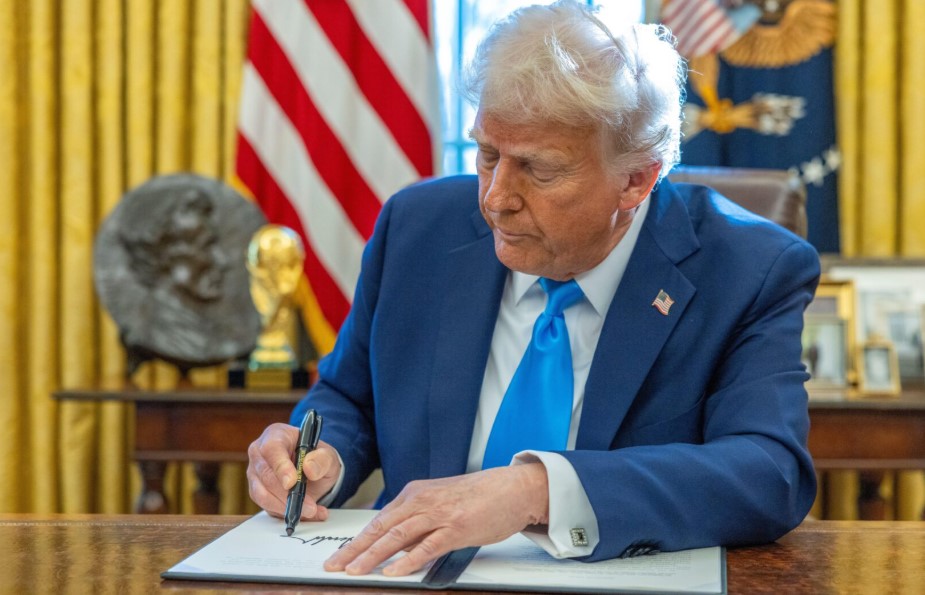
In October 2025, President Donald J. Trump signed a proclamation formally designating October 13, 2025 as Columbus Day, with strong rhetoric asserting Columbus as “the original American hero,” celebrating his bravery, faith, and significance to Western civilization. The text of the proclamation frames it as part of an effort to “reclaim his extraordinary legacy of faith, courage, perseverance and virtue” from what Trump characterizes as “left-wing arsonists” who have “sought to destroy his name and dishonor his memory.”
In his remarks surrounding the proclamation, Trump repeatedly decried recent efforts to remove statues, “tarnish” Columbus’s character, or replace the holiday with Indigenous Peoples’ Day. He also emphasized the importance of Italian-American heritage, even exclaiming (during a Cabinet meeting) “We’re back, Italians” and “We love the Italians,” signaling his administration’s intent to affirm ethnic pride linked to European immigrant roots.
Importantly, in this 2025 proclamation, Trump omits any recognition of Indigenous Peoples’ Day — in contrast to his predecessor’s more dual-framed approach. Indeed, Trump’s 2025 position, articulated earlier in the year, had made clear that he would not follow the Biden practice of also acknowledging Indigenous communities on the same date.
Functionally, the proclamation calls on Americans to observe Columbus Day with “appropriate ceremonies and activities,” and orders the U.S. flag to be flown on public buildings in honor of Columbus and all who contributed “to building our Nation.”
Political and Symbolic Significance
Trump’s reinstatement of an unabashedly heroic Columbus narrative is more than symbolic — it is deeply political and cultural, intertwining with broader debates over national identity, race, memory, and the direction of America.
Reasserting a Traditional Narrative
By framing Columbus as a heroic foundational figure, Trump pushes back against narratives that emphasize Indigenous suffering or view colonization critically. He positions his administration as restoring “true” American history, rejecting what he and his allies call “revisionism” or “cancel culture.” This narrative aligns with a broader conservative movement to reaffirm traditional symbols, monuments, and historical heroes.
Culture Wars & Identity Politics
Trump’s proclamation becomes a stake in the culture wars. The choice to resurrect Columbus Day in such forceful terms signals opposition to progressive efforts to recenter marginalized voices. His declaration of “We’re back, Italians” evokes ethnic pride and appeals to some who feel their heritage has been neglected or attacked in ongoing debates about race and belonging.
The omission of Indigenous Peoples’ Day is not simply a neutral act; it is a decision that privileges one historical narrative over another. Critics will likely argue it repeats centuries of erasure. Proponents might see it as resisting what they view as a movement to rewrite or diminish key founding figures.
Governance and Institutional Levers
Trump’s approach does not rely only on speeches. His administration has taken steps to reshape historical presentation across federal institutions. Notably, an earlier executive order, Executive Order 14253 (signed March 31, 2025), directs the Department of the Interior to review and restore monuments and remove ideological content that disparages Americans in monuments or markers. This institutional framework supports the rhetorical project of reclaiming historical symbols like Columbus.
Reactions, Criticisms, and Challenges
Trump’s proclamation has drawn swift responses — supportive from some quarters, deeply critical from others.
Support from Conservative and Ethnic Communities
Some Republicans and Italian-American leaders have applauded the move, welcoming the reaffirmation of Columbus as a symbol of national pride and heritage. For those who view the recent shift toward Indigenous-centered commemoration as erasing European contributions, Trump’s stance is a rallying point.
Pushback from Indigenous and Progressive Voices
Critics argue that Trump’s narrative is simplistic and whitewashes the harms of colonization. Scholars and Indigenous activists emphasize that Columbus’s “discovery” brought centuries of violence, enslavement, forced conversion, and land dispossession to Indigenous societies. Critics further contend that erasing Indigenous Peoples’ Day removes a necessary space for remembrance and justice.
One academic quoted in press commentary observed:
“You can’t tell a story without telling both sides of it.”
Others see it as an explicit political gesture to mobilize cultural conservatism ahead of electoral contests, using Columbus as a symbol in the “memory wars.”
Practical and Institutional Constraints
While the proclamation is powerful as symbolism, its concrete effects are constrained. The federal holiday of Columbus Day has existed for decades and remains, but many states and municipalities independently choose whether to observe it or instead celebrate Indigenous Peoples’ Day. Even if the federal government emphasizes Columbus, local traditions, school curricula, monument policies, and state observances may not align.
Additionally, there is a political risk: aggressive championing of contested symbolism may alienate moderate or minority voters who view it as tone-deaf or exclusionary.
Columbus Day 2025 in Practice: Day-of Observance and Context
On October 13, 2025, federal and many state offices will be closed in observance of Columbus Day under the proclamation. However, due to a continuing government shutdown, many federal employees are expected to be furloughed that day (i.e. they will be off without pay).
In some regions, observances may be muted or overshadowed by protests or local counterprogramming. In NYC, for instance, the 2025 Columbus Day Parade was canceled due to severe weather. In New Haven, a Columbus statue removed earlier now resides in a museum; its first Columbus Day in that setting prompts reflection on how public memorials themselves are contested.
Meanwhile, in public discourse, Trump’s proclamation has become a focal point: it is being debated in media, among historians, in Indigenous communities, and in political circles — serving as a symbol of larger battles about whose history is honored.
Broader Implications & Questions Ahead
Trump’s bold reclamation of Columbus Day in 2025 raises several enduring questions:
-
Who writes national memory? The fight over holidays is a proxy for who controls how American history is told — which figures are heroes, which are villains, and which stories are emphasized or suppressed.
-
What is the balance between celebration and critique? Some argue historical figures can be honored while still acknowledging their flaws; others contend certain legacies are too tied to injustice to be celebrated at all.
-
How do federal symbols interact with local diversity? Even if the White House promotes Columbus, local communities will continue to diverge (some observing Indigenous Peoples’ Day, others both, others Columbus). The federal proclamation cannot wholly dictate local sentiment.
-
Electoral stakes: Symbolic acts such as this can energize base voters, shift narratives, and become talking points in campaigns. The politics of memory often have real electoral consequences.
-
Will this provoke legal or institutional pushback? Museums, education systems, and state governments may resist mandated narratives. Legal challenges over monument restoration or historical reinterpretation could arise.


